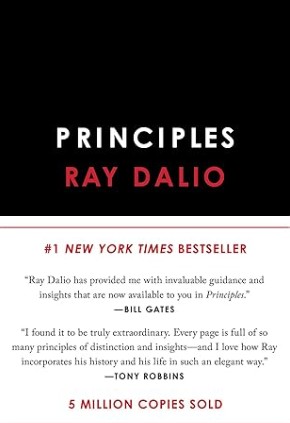
Can't Hurt Me
The most brutally honest book about what humans are truly capable of — and why you're operating at 40% of your potential right now.
About the Book
Can't Hurt Me by David Goggins is not a self-help book. It's an account of one man's refusal to accept the life he was handed — and a framework for doing the same. Goggins grew up in poverty and abuse, failed out of school, ballooned to 300 pounds working as a pest control technician, and then decided to become a Navy SEAL. He went on to complete Army Ranger school, become an ultramarathon runner, and set a world record for pull-ups. Not because he had talent. Because he out-suffered everyone else.
The book alternates between memoir and direct instruction. Each chapter ends with a challenge. It doesn't ask you to feel inspired — it asks you to do something uncomfortable. That distinction is what makes it different from almost everything else in this space.
The 40% Rule
The core idea of the entire book: when your mind tells you that you're done, you're at roughly 40% of your actual capacity. The other 60% is locked behind a mental governor — a self-preservation mechanism your brain built to keep you comfortable and safe. The governor isn't lying to protect you from real danger. It's lying to protect you from discomfort.
Goggins spent his entire life learning to override that governor — in Hell Week, in ultramarathons run on broken bones, in pull-up sessions that lasted 17 hours. His argument isn't that you should destroy yourself. It's that you have no idea what you're actually capable of because you've never pushed hard enough to find out.
The Accountability Mirror
Before Goggins could become who he wanted to be, he had to be brutally honest about who he was. He calls this the Accountability Mirror — standing in front of the mirror and refusing to lie to yourself. No excuses. No softening. Just the truth about where you are, what you're avoiding, and what it's costing you.
He wrote his goals on sticky notes and put them on the mirror — not affirmations, not vague wishes, but specific, uncomfortable truths about what he needed to change. He stared at them every day until he couldn't look away from them any longer. That's the starting point. Not motivation. Not a plan. Honesty.
The Cookie Jar
When Goggins is suffering — mid-race, mid-Hell Week, at hour 14 of a pull-up record attempt — he reaches into what he calls his Cookie Jar: a mental inventory of every hard thing he has ever done. Every obstacle he overcame. Every time he was told he couldn't and did it anyway.
The Cookie Jar isn't about arrogance. It's about evidence. When the mind says you can't do this, you reach in and pull out proof that it's wrong. Build yours deliberately. Every hard thing you do — every workout you finish when you wanted to quit, every uncomfortable conversation you had instead of avoiding — goes in the jar. You're not just doing hard things. You're building ammunition for the next hard thing.
Taking Souls
In situations where someone has power over you — a drill instructor trying to break you, a boss dismissing you, a situation designed to make you quit — Goggins' response is to perform so well that you psychologically flip the dynamic. You outwork them so completely, so visibly, with such obvious refusal to break, that the power shifts. He calls this Taking Souls. It's not about revenge or ego. It's about using someone else's attempt to diminish you as fuel.
Callousing the Mind
Goggins argues that the mental governor — the voice that says enough, stop, this is too hard — is calibrated to your past experiences. If you've never pushed past a certain threshold, the governor activates early. But every time you push through it, the threshold moves. What felt impossible becomes the new baseline.
This is why he advocates for callousing the mind: deliberately doing hard, uncomfortable things not because they're productive, but because they expand what your mind believes is possible. Cold mornings. Workouts you don't want to do. Conversations you keep avoiding. Not as punishment — as training for the governor.
Why I Read This Book
I picked up this book as an audiobook one summer to listen to while mowing the lawn. I had listened to David Goggins previously on a podcast and was struck by his no-nonsense, no BS way of speaking. He was modest, and direct.
David’s story reminded me how we all have battles, nobody is immune to hardship, it is how you deal with, and overcome that hardship that defines you. His story reminded me of a time when I thought I was physically exhausted during my military training. The old me would have quit long ago, but I persevered, I didn’t even think of stopping, this was just something I had to complete.
Admittedly, I had lost that drive. I would stop when things got difficult. I would bail out, quit, change course and wondered why I never got anywhere. This book reminded me of my warrior within, and how even if you’ve never been tested this way, there is a warrior in all of us, that can get stuff done when it gets difficult. This book didn’t teach me something new, it reminded me of something I had forgotten.
One Honest Warning
Goggins is not a template. His methods sit at an extreme that most people have no reason to inhabit — and some of his stories involve physical damage that he'd likely handle differently with hindsight. The point of the book isn't to run 100 miles on stress fractures. The point is to stop treating discomfort as a stop sign. Where you apply that principle is up to you.
If Atomic Habits is about making hard things easier through systems, Can't Hurt Me is about learning to do hard things while they're still hard. Both are true. Both are necessary. They just operate on different terrain.
Why This Book Matters
Most self-improvement content is optimistic and accommodating. It meets you where you are and asks you to take small steps. Goggins doesn't do that. He argues that the comfortable, incremental approach is exactly what keeps most people stuck — that real change requires going somewhere genuinely uncomfortable, not just inconvenient. Whether or not you agree with every choice he made, the core argument is hard to dismiss: you are more capable than you believe, and the only way to find out is to stop believing the ceiling.
Who Should Read This
- Anyone who keeps starting and stopping — this book is about finishing
- People who know they're operating below their potential and are tired of being comfortable with it
- Those who need a perspective reset — a reminder of what actual hardship looks like before calling something hard
- Readers who respond better to a challenge than to encouragement
- Anyone who has read Man's Search for Meaning and wants a modern, visceral counterpart on the theme of endurance
The Bottom Line
Can't Hurt Me will make you uncomfortable. That's the product. It will make you look at your own excuses differently. It will make the thing you've been putting off seem smaller. It won't make you David Goggins — but it will make you harder to stop than you were before you read it. Pick up the expanded edition if you can — it includes hours of additional conversation between Goggins and his co-author that add significant context to every story in the book.
Get Can't Hurt Me on Amazon →
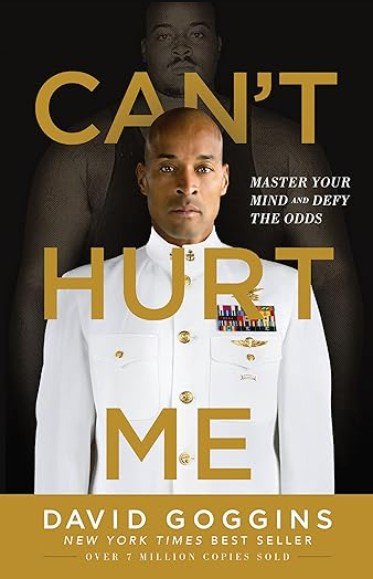
The Let Them Theory
The book that will make you stop wasting energy on what you can't control — and start building the life you actually want.
About the Book
The Let Them Theory by Mel Robbins is built on two words that will change how you approach every relationship, decision, and stressor in your life: Let Them. Let them judge you. Let them misunderstand you. Let them disappoint you. Let them make their own choices. And then — this is the part most people miss — Let Me. Let me decide how I respond. Let me take responsibility for my own happiness. Let me focus on what I can actually control.
The book became a #1 New York Times bestseller almost immediately after release, selling over 8 million copies in its first year. Robbins takes a concept that sounds obvious — stop trying to control other people — and shows you exactly why you can't, why it's destroying your peace, and what to do instead.
The Core Idea
Most of your stress, frustration, and exhaustion comes from trying to manage things you have no control over. Other people's opinions. Other people's choices. Other people's emotions. You're operating on the belief that if you just try hard enough, explain clearly enough, or care intensely enough, you can make them see it your way. You can't.
The theory has two parts. Let Them is about releasing control. Let Me is about reclaiming your power — let me decide what I do next, let me take responsibility for my response. Without both parts, the theory doesn't work. Together, they create freedom.
The Two-Part Framework
Part 1: Let Them
Let them judge your career change. Let them be disappointed in your boundaries. Let them make choices you wouldn't make. It's not about not caring. It's about recognizing that their choices, opinions, and behaviors are not yours to manage.
Part 2: Let Me
This is where you take your power back. Let me decide how I respond. Let me set boundaries that work for me. Let me stop waiting for approval and start living the life I want. “Let Them” gives you peace. “Let Me” gives you power. You can't have one without the other.
How This Applies to Relationships
The theory doesn't mean you tolerate bad behavior. It means you stop trying to change people and start making decisions based on who they actually are, not who you wish they were. Most relationship stress comes from the gap between your expectations and someone else's reality. People show you who they are through their actions. Believe them.
How This Applies to Work
You can't control whether you get the promotion. You can't control your coworker's work ethic. But you spend massive amounts of energy trying. The Let Them Theory says: let them make that decision — and then let yourself decide if this is the company you want to work for. You're not giving up. You're redirecting energy from what you can't control to what you can.
Why This Book Matters
Most self-help books tell you how to get better at managing your life. The Let Them Theory tells you to stop managing other people's. It's the book for chronic overthinkers, people-pleasers, and anyone who's exhausted from trying to keep everyone else happy while neglecting themselves.
How to Apply It
Start small. Next time someone does something that frustrates you, pause before reacting. Say it out loud: “Let them.” Then ask yourself: “Let me — what? Let me decide how I respond. Let me set a boundary. Let me stop expecting them to be different.” The goal isn't to become emotionless. It's to stop wasting energy on what you can't control.
Who Should Read This
- People-pleasers who are exhausted from managing everyone's emotions
- Anyone stuck in a relationship where they're doing all the work
- Overthinkers who replay conversations and wish people had responded differently
- Those dealing with family dynamics where everyone has opinions on how you should live
- Anyone who feels like they're trying hard but nothing's changing
The Bottom Line
The Let Them Theory is not complicated. It's two simple ideas that are incredibly hard to live. Let people be who they are. Then take responsibility for what you do next. If you've read The Four Agreements and struggled with “Don't Take Anything Personally,” this book shows you how. It's not philosophy. It's a tool. Use it.
Get The Let Them Theory on Amazon →
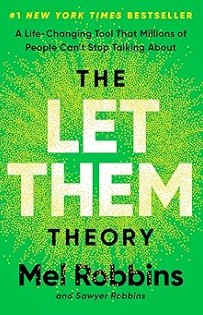
The 5 Types of Wealth
The book that redefines what it actually means to be rich — and it has almost nothing to do with your bank account.
About the Book
The 5 Types of Wealth by Sahil Bloom builds a framework around five types of wealth that actually determine whether your life feels successful: Time Wealth, Social Wealth, Mental Wealth, Physical Wealth, and Financial Wealth. The book became an instant New York Times bestseller. Bloom was a Stanford-educated investment banker grinding through 100-hour weeks, chasing financial success at the expense of nearly everything else. He made it. Then he looked around and realized he was miserable.
The Five Types of Wealth
Time Wealth
Time wealth is the freedom to spend your time on what creates energy in your life rather than what drains it. Bloom introduces the concept of becoming a “time billionaire” — recognizing that your most valuable asset isn't money, it's the finite hours you have left. The core practice: the Energy Calendar. Map every activity as energy-creating or energy-draining. Double down on what creates energy. Ruthlessly eliminate what drains it.
Social Wealth
Strong social connections are the single greatest predictor of health, happiness, and longevity. Real social wealth comes from showing up for people with no agenda and no scorecard. The actionable piece: The Five People Rule. Identify the five people you spend the most time with. Are they lifting you up or pulling you down?
Mental Wealth
Mental wealth is the commitment to continuous learning, curiosity, and intellectual growth. Your brain is either expanding or contracting — there's no neutral. One of the most powerful ideas: identity transitions. Most people tie their identity to a role. When that role changes, they collapse. Mental wealth is the ability to hold your identity lightly enough that life's inevitable transitions don't destroy you.
Physical Wealth
Physical wealth is your health and vitality — the foundation on which every other type of wealth is built. Bloom distills it into three principles: Move, Eat, Sleep. Move your body daily. Eat real food, mostly plants, not too much. Sleep 7–8 hours. No hack. No shortcut.
Financial Wealth
The critical question isn't “How much can I make?” — it's “How much is enough?” Bloom introduces the concept of defining your number: the amount that provides genuine security without requiring you to sacrifice the other four types of wealth to get there.
Why This Book Matters
Most self-help books give you tactics for optimizing one area of life. The 5 Types of Wealth gives you a system for evaluating everything. When you optimize only for financial wealth, you end up rich and empty. When you balance all five, you end up with something closer to an actually good life.
Why I Read This Book
From the outside looking in, I may seem like I have it all. A home, steady employment, a supportive partner. And yet I still felt like something was missing. The lure of social media had me convinced I wasn’t enough — not wealthy enough, not successful enough, not far enough along. Reading this book reminded me just how fortunate I actually am.
I have everything I need and then some. I’m valued in my profession, in my family, and in my relationship. It’s easy to lose sight of that when you’re constantly measuring your life against someone else’s curated highlight reel. This book was the reminder I didn’t know I needed: comparison is the thief of joy.
Who Should Read This
- Anyone who has achieved traditional success and feels unfulfilled
- People in their 20s and 30s who want to avoid sacrificing their life for a paycheck
- High earners who are realizing money didn't solve what they thought it would
- Anyone facing a major life transition — career change, parenthood, retirement
- Readers who want a clear framework for making better life decisions
The Bottom Line
The 5 Types of Wealth is the antidote to the default path. If you've read The Psychology of Money and understood that wealth is about behavior, this book takes it further — wealth is about balance. If you've read Atomic Habits and built systems that work, this book helps you decide which systems are worth building in the first place. Read it. Then take the assessment. Then fix what's broken.
Get The 5 Types of Wealth on Amazon →
The Four Agreements
A simple but profound guide to personal freedom through four ancient Toltec principles.
About the Book
The Four Agreements by Don Miguel Ruiz distills ancient Toltec wisdom into four powerful commitments that can transform your life. It's a short read — under 150 pages — but the simplicity is the point. These aren't complicated strategies or 12-step programs. They're four agreements you make with yourself to break free from self-limiting beliefs and live with authenticity.
The Four Agreements
1. Be Impeccable with Your Word
Speak with integrity. Say only what you mean. Your words create your reality — gossip, lies, and negative self-talk all poison your mental environment. When you commit to speaking truth and avoiding words that harm yourself or others, you reclaim massive personal power.
2. Don't Take Anything Personally
Nothing others do is because of you. What people say and do is a projection of their own reality, their own beliefs and conditioning. When you take things personally, you make yourself a victim. When you realize that everyone lives in their own mental universe, you become immune to criticism and free from needing approval.
3. Don't Make Assumptions
Ask questions. Communicate clearly. We assume others think like us, want what we want, and perceive the world the same way. This causes endless drama and misunderstanding. When you stop assuming and start clarifying, relationships transform overnight.
4. Always Do Your Best
Your “best” changes moment to moment. The point isn't perfection. It's giving what you have in this moment without self-judgment or regret. This agreement prevents burnout while keeping you moving forward.
Why This Book Matters
Most self-help books give you tactics. This one gives you principles. The Four Agreements aren't about productivity hacks or morning routines — they're about fundamentally rewiring how you think about yourself and interact with the world.
How to Apply It
Pick one agreement and practice it for a week. Notice how often you violate it without realizing. Start with “Don't Take Anything Personally” — you'll be shocked how much mental energy you waste reacting to other people's opinions that have nothing to do with you.
Who Should Read This
- Anyone stuck in people-pleasing patterns or constantly seeking external validation
- People who ruminate on conversations or replay conflicts in their head
- Those looking for a simple, practical framework for mental freedom
- Readers interested in ancient wisdom traditions presented in modern language
The Bottom Line
The Four Agreements is deceptively simple. You can read it in an afternoon, but living it takes a lifetime of practice. These aren't intellectual concepts to memorize. They're tools for daily liberation from the stories, judgments, and assumptions that keep you trapped. Pairs perfectly with Atomic Habits and Psycho-Cybernetics — it's the philosophical foundation that makes all the other work stick.
Get The Four Agreements on Amazon →
Atomic Habits
The most practical book ever written about how human behavior actually works — and how to use that knowledge to build a better life.
About the Book
Atomic Habits by James Clear is built on one core idea: you don't rise to the level of your goals, you fall to the level of your systems. Whether we realize it or not, everything we do is driven by habits — invisible systems running quietly in the background, shaping our days and ultimately our lives. The book isn't about willpower or motivation. It's about engineering your environment so that good behavior becomes the path of least resistance.
The Core Idea: Systems Over Goals
"You do not rise to the level of your goals. You fall to the level of your systems." — James Clear
Whether we realize it or not, our habits are based on our systems, positive or negative. Everything follows a trigger. The more we recognize our systems, the more we can work towards adjusting them to become the person we want to be. That's the whole game. Not discipline. Not motivation. Systems.
The Habit Loop
Every habit runs on a four-step loop: Cue → Craving → Response → Reward. Clear calls this the Four Laws of Behavior Change. To build a good habit: make it obvious, make it attractive, make it easy, make it satisfying. To break a bad one, invert every law.
The Takeaways I'm Implementing
No Zero Days: If I'm working toward a goal, there is no day where I do absolutely nothing to move it forward. Something is always better than nothing — and that something cements the identity of being the kind of person who shows up.
Don't Miss Twice: Missing once is an accident. Missing twice is the start of a new habit. The rule isn't perfection — it's recovery speed.
Identity-Based Habits: Instead of “I want to run a marathon,” the goal becomes “I am a runner.” Every habit is a vote for the person you're becoming. Cast enough votes and your identity changes — and your behavior follows naturally.
Why This Book Matters
Most people try to change behavior through sheer will. They set a goal, feel motivated for a week, then slide back and blame themselves. Atomic Habits shows why this approach almost always fails. The 1% rule alone is worth the read: improving by just 1% every day compounds to 37 times better over a year.
How to Apply It
Start with a habit audit. Write down everything you do in a day and mark each habit as positive (+), negative (−), or neutral (=). You can't change what you can't see. Then pick one habit you want to build and apply the Two-Minute Rule: scale it down until starting takes less than two minutes.
Who Should Read This
- Anyone who has tried to build a habit and failed — this book explains exactly why
- People who rely on motivation and find it unreliable
- Those who want practical, science-backed strategies rather than vague inspiration
- Anyone interested in the psychology of behavior change
The Bottom Line
Atomic Habits is the most actionable self-improvement book I've read. It doesn't ask you to be more disciplined or more motivated. It asks you to be smarter about how you design your environment and your identity. Pair it with The Four Agreements for the mindset foundation, and Psycho-Cybernetics for the self-image work that makes new habits actually stick.
Get Atomic Habits on Amazon →
Psycho-Cybernetics
The book that taught the world that changing your behavior starts with changing the image you hold of yourself.
About the Book
Psycho-Cybernetics was written in 1960 by Maxwell Maltz, a plastic surgeon who noticed something unsettling: many patients had successful operations that objectively improved their appearance, but still felt exactly as ugly, unconfident, and unhappy as before. The surgery changed their face. It didn't change their self-image. That observation became the foundation for one of the most influential self-help books ever written.
The Core Idea: Your Self-Image Runs the Show
Your self-image — the mental picture you hold of yourself — sets the boundaries for what you believe you can do, what you can have, or who you can become. Change your self-image, and your behavior and results will follow. Your brain functions like a goal-seeking mechanism — a kind of autopilot. Give it a clear target, and it works, often unconsciously, to get you there.
The Visualization Exercise
Full disclosure — I'm currently in the middle of this book, and I'm hooked. One exercise I keep coming back to: use your imagination to create a short film of your ideal life. Start by writing down your screenplay. Then build in detail slowly:
- What are you wearing?
- What scent is in the air?
- What's the weather like?
- What are you hearing — background sounds, a crowd, waves, wind in trees?
- Who else is with you? Family? Friends? Pets?
Once you've written it, meditate on it. Create a theatre in your mind and watch it play out in explicit detail. Spend 30 minutes a day reliving your story. Maltz shows, with clinical evidence, that the brain cannot effectively distinguish between a vividly imagined experience and a real one. You're literally rehearsing success.
My Ideal Morning — An Example
I awake just after sunrise. The room is dimly lit. White curtains covering large windows softly billow with the ocean breeze. I quietly slide out of my king-sized bed and kiss my still-dozing partner on the forehead before walking downstairs. Upon entering the kitchen, floor-to-ceiling windows reveal the sunrise over the Pacific Ocean beyond my swimming pool. I grind locally grown coffee, prepare a double espresso, and walk outside to stand at the pool's edge. Zebra doves coo in the distance. Plumeria trees line the yard, gently swaying, filling the air with something that smells exactly like a life worth building.
That's the exercise. Write your version. Live in it daily. Let it shape your autopilot.
The SUCCESS Acronym
- Sense of Direction
- Understanding
- Courage
- Charity
- Esteem
- Self Confidence
- Self Acceptance
Why This Book Matters
Most self-improvement books focus on external behavior — what to do differently. Psycho-Cybernetics goes deeper. It focuses on the internal operating system that drives that behavior. You can build all the habits in the world, but if your self-image is stuck in a past version of yourself, you'll keep unconsciously sabotaging your own progress.
Who Should Read This
- Anyone who feels stuck despite doing “everything right”
- People who self-sabotage, procrastinate, or constantly underestimate themselves
- Those interested in visualization, mental rehearsal, and the psychology of peak performance
- Readers who want to understand the root cause of confidence — not just the symptoms
The Bottom Line
Psycho-Cybernetics is older than most self-help books on the shelf today, but it's more relevant than most of them too. There's a reason it has sold over 30 million copies. Read it alongside Atomic Habits and you'll have both the internal and external tools to build the life you're after.
Get Psycho-Cybernetics on Amazon →
The Psychology of Money
One of the best modern personal finance books — and it has almost nothing to do with numbers.
About the Book
The Psychology of Money by Morgan Housel makes a case that most personal finance books completely miss: the biggest factor in financial success isn't intelligence, spreadsheets, or investment strategy. It's behavior. Specifically, it's how you think about money — and how your emotions, ego, and personal history shape every financial decision you make. The writing is sharp and story-driven. Each chapter is a standalone essay built around one big idea.
Nobody Is Crazy
Your financial behavior makes complete sense when you understand your own history. Someone who grew up in poverty hoards cash — that's survival logic. Someone who grew up wealthy takes big investment risks — that's a lifetime of watching risk pay off. The first step to improving your financial life is understanding where your money beliefs came from — and whether they still serve you.
The Core Takeaways
Wealth Is What You Don't See
Real wealth is the money you didn't spend. It's savings, investments, and options. The wealthiest people you'll ever meet are often invisible.
Compound Interest Is the Only Free Lunch
Warren Buffett is worth over $100 billion. Roughly $97 billion of that was accumulated after his 65th birthday. He started investing at age 11. His secret isn't genius stock picking — it's time. Start early, stay consistent, don't interrupt the process.
Pay Yourself First
Before any bill, any subscription, any discretionary spending — take your savings off the top and automate it. When saving is the last thing that happens after all spending is done, there's rarely anything left. The amount matters less than the habit.
Real Wealth Is Hidden, Not Flashy
Lifestyle creep is one of the most common and least discussed financial destroyers. Every raise tends to be immediately absorbed by a step up in spending. Decide what your money is for before it arrives.
Why This Book Matters
Most people know what they should do with money. The problem is almost never knowledge — it's behavior under pressure. The Psychology of Money helps you understand your own financial wiring so you can make better decisions when emotions run high.
Who Should Read This
- Anyone who knows what they should do financially but can't seem to do it consistently
- People who want to understand money without wading through technical investing content
- Those who feel anxious, confused, or conflicted about their financial situation
- Readers interested in behavioral economics and human decision-making
The Bottom Line
The Psychology of Money is the personal finance book for people who already know the basics but keep getting in their own way. It will give you a clearer picture of why you do what you do with money — and that self-awareness is worth more than any specific strategy. Pair it with Rich Dad Poor Dad for the mindset framework that started the financial independence conversation, and The Richest Man in Babylon for principles that have stood the test of centuries.
Get The Psychology of Money on Amazon →
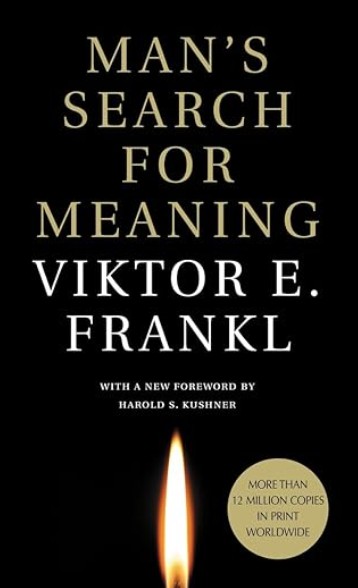
Rich Dad Poor Dad
The book that rewired how a generation thinks about money — and made millions of people question everything they were taught about getting ahead.
About the Book
Rich Dad Poor Dad by Robert Kiyosaki has sold over 40 million copies and spent years on the New York Times bestseller list. Published in 1997, it tells the story of two father figures in Kiyosaki's life: his own father — highly educated, a lifelong government employee, financially struggling — and his best friend's father, a man with little formal education who built significant wealth through business and investing. The contrast between how these two men thought about money forms the entire argument of the book.
The Core Idea: Assets vs. Liabilities
In his framework: an asset puts money in your pocket. A liability takes money out. Rich people spend their lives acquiring assets. Poor and middle-class people spend their lives acquiring liabilities they mistake for assets. His most provocative example: your home. Most people consider their home their greatest asset. Kiyosaki argues that unless it's generating income, it's a liability.
The Rat Race
Kiyosaki describes the standard middle-class financial life as the rat race: you get a job, earn a salary, spend most of it on a lifestyle and liabilities, work harder to earn more, spend more, and repeat — never escaping the cycle of trading time for money. The goal is to get out by building income that arrives whether you work or not.
Financial Intelligence Over Financial Security
Kiyosaki argues that financial intelligence is a skill, and like all skills, it can be developed. He pushes readers to learn accounting, investing, market dynamics, and law — not to become experts, but to understand enough to make better decisions.
Where the Honest Caveats Come In
The advice is conceptual rather than actionable. The specific investment examples reflect a market context that doesn't apply everywhere. Read it as a mindset book, not a manual.
Who Should Read This
- Anyone who has never seriously questioned the standard earn-save-retire financial path
- People in their 20s and early 30s building financial habits for the first time
- Those who feel like they earn decent money but can't seem to get ahead
- Anyone curious about passive income, real estate, or building assets outside their job
The Bottom Line
Rich Dad Poor Dad won't tell you exactly what to do with your money. What it will do is make you think about money differently — and that shift in thinking is worth more than any specific tactic.
Get Rich Dad Poor Dad on Amazon →
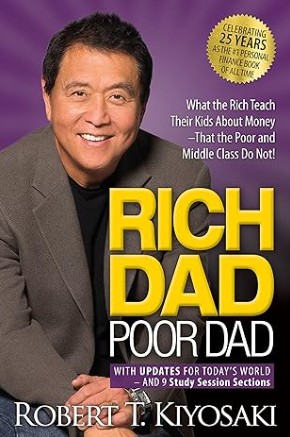
The Richest Man in Babylon
Financial wisdom that has outlasted empires — written as parables set in ancient Babylon, but more relevant today than most books published this year.
About the Book
The Richest Man in Babylon by George S. Clason was first published in 1926 — 100 years ago — and it hasn't aged a day. The lessons are delivered as parables set in ancient Babylon, following merchants, tradespeople, and money lenders navigating the same financial challenges that trip people up today: debt, lifestyle creep, bad investments, and the failure to pay themselves first.
The Seven Cures for a Lean Purse
Pay Yourself First
Before your landlord, before your grocer, before any bill — take 10% of everything you earn and set it aside. Not for spending. For building. This single principle, applied consistently over time, is the foundation of every fortune described in the book.
Control Your Expenditures
Live below your means — not by living poorly, but by distinguishing between what you need and what you want.
Make Your Money Multiply
Money sitting idle earns nothing. Put it to work. Your savings should generate income without you trading more hours for it.
Guard Against Loss
The first principle of investment isn't return — it's protection of principal. Do not entrust your money to people who are not expert in its preservation.
Make Your Home a Profitable Investment
Own where you live if you can. A home builds equity with every payment rather than building wealth for a landlord.
Insure a Future Income
Plan for the version of yourself that can no longer earn at full capacity. Retirement savings, insurance, and long-term planning aren't pessimism — they're respect for your future self.
Increase Your Ability to Earn
Invest in yourself. Skills, knowledge, and expertise are the highest-returning assets you will ever own.
How to Apply It
Open your banking app today. Set up an automatic transfer of 10% of your next paycheck to a savings or investment account the moment it arrives. Don't wait until the end of the month. There will never be anything left.
Who Should Read This
- Anyone starting their financial journey who wants fundamentals, not complexity
- People in debt who need a clear, calm framework for digging out
- Those who feel like they earn decent money but have nothing to show for it
The Bottom Line
The Richest Man in Babylon is the shortest path from financial confusion to financial clarity. A hundred years of readers can't be wrong. Pair it with The Psychology of Money to understand the behavioral side of why these principles are harder to follow than they look.
Get The Richest Man in Babylon on Amazon →
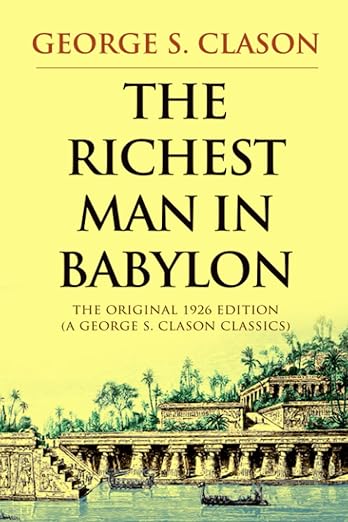
101 Essays That Will Change The Way You Think
Not a book you read once and put down. A book you live with.
About the Book
101 Essays That Will Change The Way You Think by Brianna Wiest is a collection of short, sharp essays about how we think, why we suffer unnecessarily, and what it looks like to build a life that's actually aligned with who you are rather than who you were told to be.
Full disclosure: this is my go-to post-workout, making-my-coffee, drive-to-the-office audiobook. Every day I find something I can relate to — a story, a quote, an idea that gives me something to carry through my day and turn over in my mind. It's the kind of book I keep coming back to. A real masterpiece.
What Makes It Different
Most self-help content operates on the surface. Wiest goes deeper. She's interested in why you do what you do, why you feel what you feel, and why the gap between who you are and who you want to be persists even when you're trying hard to close it.
The Themes That Hit Hardest
You Are Not Your Thoughts
The thoughts that run through your mind are not facts, not commands, and not necessarily yours. They're often echoes of old conditioning. Learning to observe your thinking rather than be controlled by it is one of the most liberating shifts this book offers.
Discomfort Is Data, Not Disaster
Wiest challenges the idea that emotional discomfort is something to be eliminated as quickly as possible. Often it's information — a signal that something in your life needs attention, adjustment, or honest acknowledgment.
Self-Awareness Is the Work
Genuine self-knowledge — knowing what you actually value, what you actually fear, what actually makes you happy versus what you think should make you happy — is the real work of becoming a better person.
How to Apply It
Don't try to read this cover to cover in one sitting. Pick an essay at random. Read it slowly. Sit with it. One essay a day is plenty.
Who Should Read This
- Anyone who feels like they're doing everything right but still feels off
- People who are drawn to introspection and genuine self-examination
- Those who find most self-help books too shallow or too prescriptive
The Bottom Line
101 Essays is not a quick fix. It's not a system. It's a companion — something to keep coming back to as you change and grow. If you read one book from this list that's not about habits or money or productivity, make it this one.
Get 101 Essays on Amazon →
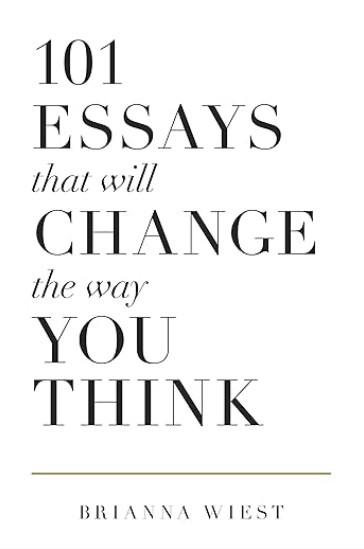
Man's Search for Meaning
The book that proves even in the worst circumstances imaginable, you still have one freedom that can never be taken from you: the freedom to choose how you respond.
About the Book
Man's Search for Meaning by Viktor E. Frankl is two books in one. The first half is Frankl's account of life as a prisoner in Nazi concentration camps during World War II — Auschwitz, Dachau, and others — where he lost his father, mother, brother, and wife. The second half introduces logotherapy, the psychological theory he developed from those experiences. The book has sold over 16 million copies, been translated into more than 50 languages, and is consistently listed as one of the most influential books ever written.
The Core Idea: Everything Can Be Taken Except One Thing
"Everything can be taken from a man but one thing: the last of the human freedoms — to choose one's attitude in any given set of circumstances, to choose one's own way."
You can't always control what happens to you. But you can always — always — control your response. Even in a concentration camp, where every external freedom has been stripped away, you still have the internal freedom to decide what your suffering means and how you'll carry it.
Why I Read This Book
This book came to me at a particularly difficult time in my life. I was out of college, between jobs, on the bad end of a serious relationship and my mental health was clearly not in a good place. Reading Frankl’s experiences and mindset in spite of them was eye opening, and motivating. In any hardship, there is always light if you choose to see it, and move towards it.
While I knew that I couldn’t change what happened, I could choose my response. I could wallow in the depths of depression, or I could rise above it, learn from what happened, and become a better version of myself. This led me to one of my favorite quotes, that I think about often:
"You may not be responsible for what happened to you, but you are responsible for how you react to it."
Logotherapy: The Will to Meaning
Frankl argued that the primary human drive is the search for meaning — not pleasure, not power. We can endure almost anything if we have a reason.
The Question That Changes Everything
We shouldn't be asking “What do I want from life?” We should be asking “What does life want from me?” Life is asking you a question every single day. Your answer is how you live.
Who Should Read This
- Anyone going through a difficult period and struggling to see the point
- People who feel like their life lacks purpose despite having everything they thought they wanted
- Those interested in existential psychology and the question of why we're here
- Readers who want to understand resilience at its most extreme
The Bottom Line
Man's Search for Meaning is not an easy read. It will confront you with the worst of what humans are capable of. But it will also show you the best — the quiet dignity of people who refused to let circumstances define them. Read it when you're struggling. Read it when life feels pointless. Read it when you need a reminder that humans can endure almost anything — as long as they have a reason.
Get Man's Search for Meaning on Amazon →
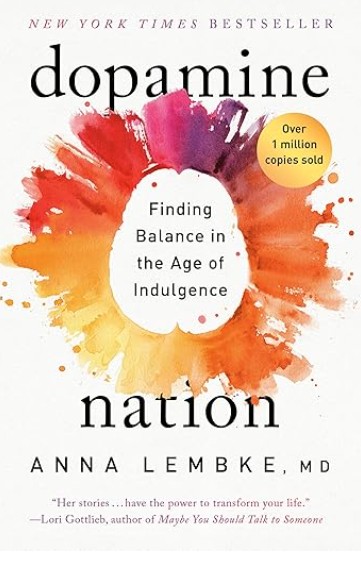
Dopamine Nation
A Stanford psychiatrist's unflinching look at why we overconsume in a world engineered for pleasure — and how finding balance starts with choosing discomfort.
About the Book
Dopamine Nation by Anna Lembke, MD is one of the most important books written about modern life. Lembke is a Stanford psychiatrist and chief of Stanford's Addiction Medicine Dual Diagnosis Clinic. The insight at the core of this book: the mechanisms driving clinical addiction are the same mechanisms driving the low-grade restlessness and compulsive overconsumption most of us experience every day. The difference is one of degree, not kind.
The Dopamine Balance
Dopamine is the brain's anticipation chemical — released not just by pleasure, but by the expectation of reward. Every time you experience something pleasurable, your brain tips toward pleasure on its internal scale. To restore balance, it tips an equal amount toward pain. That correction is what we experience as craving, restlessness, and dissatisfaction after the pleasure fades.
The Pleasure-Pain Seesaw
With repeated exposure to the same stimulus, the pleasure response weakens and the pain response strengthens — which is why the same amount of alcohol, sugar, or screen time that once felt satisfying now barely registers, and the deficit it leaves behind feels worse than before. This explains tolerance. And it explains why, after a period of abstinence, the original pleasure returns.
Dopamine Fasting
One of the most counterintuitive ideas in the book: the path back to pleasure runs through pain. When you remove the flood of easy reward, the brain's baseline slowly resets. Things that once seemed underwhelming — a walk, a conversation, a meal without a screen — begin to feel genuinely satisfying again.
Self-Binding
Lembke introduces the concept of self-binding: creating deliberate barriers between yourself and the thing you're trying to consume less of. Put your phone in another room. Delete the app. Don't keep the thing in the house. This pairs directly with the core insight of Atomic Habits — friction matters.
Who Should Read This
- Anyone who reaches for their phone without thinking — and doesn't like that they do it
- People who feel vaguely dissatisfied despite having everything they thought they wanted
- Those who have tried to cut back on something and found it harder than expected
- Readers of Atomic Habits who want to understand the deeper biology underneath the behavioral science
The Bottom Line
Dopamine Nation is not a comfortable read. It will make you look at your habits honestly. And it will give you a clear, science-backed framework for why choosing discomfort — deliberately, strategically — is one of the most powerful things you can do for your long-term wellbeing.
Get Dopamine Nation on Amazon →
Principles
The operating system behind one of the world’s most successful investment firms — and a framework for making better decisions in every area of life.
About the Book
Principles by Ray Dalio is the distillation of a lifetime of hard-won lessons from one of the most successful investors and organizational builders of the modern era. Dalio founded Bridgewater Associates in 1975 out of a two-bedroom apartment in New York City. By the time he wrote this book, it had become the largest hedge fund in the world, managing roughly $160 billion in assets. Principles is his attempt to explain exactly how he built it — not through luck or brilliance, but through a systematic approach to learning, decision-making, and building a culture that others could operate within.
The book is divided into three sections: a memoir covering Dalio’s early life and career, a set of life principles he developed from those experiences, and a comprehensive set of work principles that govern how Bridgewater operates. You don’t need to work in finance to find it valuable. The underlying framework — how to think clearly under uncertainty, how to make good decisions consistently, how to build systems that outlast any individual — applies everywhere.
The Core Idea: Principles Over Instinct
Dalio’s central argument is that almost every situation you face is a version of a situation that has happened before — to you or to someone else. If you respond to each new situation from instinct, you’ll be inconsistent and you won’t learn from your mistakes in any systematic way. But if you identify the principles that should guide your response to different types of situations, you can pre-commit to decisions before emotions distort your thinking, and you can refine your approach as you accumulate evidence about what works.
This is what Dalio did with every major error at Bridgewater. Rather than moving past mistakes as quickly as possible, he investigated them, identified the principle he had violated or lacked, and wrote it down. Over decades, this produced the five-hundred-plus principles in this book — not as abstract philosophy, but as the actual operating manual for how he and his organization make decisions.
Radical Truth and Radical Transparency
The two principles Dalio returns to most are radical truth and radical transparency. Radical truth means saying what you actually think, even when — especially when — it’s uncomfortable. Radical transparency means making information and reasoning visible to everyone involved in a decision, rather than filtering it through hierarchy or ego.
At Bridgewater, this played out in extreme forms: meetings were recorded so anyone could review them, employees were expected to challenge the reasoning of senior leaders publicly, and performance data was visible across the organization. The goal wasn’t discomfort for its own sake. It was to eliminate the blind spots and political distortions that cause organizations — and individuals — to make the same mistakes repeatedly.
You don’t have to run your life like a hedge fund to apply this. The underlying principle is simpler: the more honest feedback you get about reality, the better your decisions will be. Most people surround themselves with filtered information. Dalio argues that’s exactly why most people never improve as fast as they could.
The Pain + Reflection = Progress Formula
One of the most practically useful ideas in the book: pain is not something to avoid — it’s information. Every time something hurts — a failed investment, a broken relationship, a decision that backfired — there is a principle embedded in that experience waiting to be extracted. Dalio’s formula is explicit: pain + reflection = progress. Without the reflection, the pain is just cost. With it, the same pain becomes the most valuable feedback you’ll ever receive.
This connects directly to the growth mindset literature and to Frankl’s argument about suffering having meaning only when you choose to find it. Dalio comes to the same place from an entirely different direction: the investment world, where losing money and learning from it is the only path to eventually winning consistently.
The Five-Step Process
Dalio outlines a five-step process for achieving any goal — personal or professional. It sounds simple. Executing it consistently is harder than almost anything else in the book.
Step 1: Have clear goals
Be specific about what you’re trying to achieve. Vague aspirations produce vague results. Clear targets allow you to measure progress and recognize when you’re off course.
Step 2: Identify and don’t tolerate problems
Most people sense problems before they fully acknowledge them. Dalio argues that identifying problems early — and refusing to rationalize them away — is where most meaningful progress is made or lost. Pain is often the signal that a problem exists. Don’t run from it.
Step 3: Diagnose the root causes
Don’t fix the symptom. Find out why the problem exists. Is it a knowledge gap? A habit? A structural flaw in how you’re approaching something? Treating symptoms without diagnosing causes is how the same problems recur indefinitely.
Step 4: Design a plan
Once you understand the root cause, create a specific plan to address it. Not a vague intention — a concrete sequence of steps. Then execute it.
Step 5: Do what’s needed to push through
The bottleneck is almost always execution. You know what to do. Doing it is harder. Dalio argues this is where most people stop — and where the people who build great things keep going.
Believability-Weighted Decision Making
One of the most practically useful frameworks in the work principles section: when making important decisions, don’t weight all opinions equally. Weight them by the track record and relevant expertise of the person offering them. Dalio calls this “believability weighting.” Your own strong feeling about a decision should be tempered if people with more relevant experience and better track records disagree with you. Their disagreement is data worth taking seriously.
This runs counter to how most people operate — we tend to seek out confirmation of what we already think. Believability weighting is a systematic counter to that bias. It requires intellectual humility that is genuinely difficult to practice but genuinely valuable when you do.
Ego Is the Enemy of Learning
A theme Dalio returns to throughout: the biggest obstacle to getting better at anything is the ego’s need to be right. When you’re wrong, ego reframes it as someone else’s fault or minimizes the significance. This is how people make the same mistakes for years without understanding why.
The antidote is what Dalio calls being “radically open-minded” — treating every piece of critical feedback as potentially valuable, no matter its source or how uncomfortable it is to receive. This doesn’t mean accepting all criticism as valid. It means examining it seriously rather than defending against it reflexively.
Why I Read This Book
What drew me to Principles was the idea that someone had actually written down how they think. Not inspiration, not motivation, not a story about success — but the actual decision-making framework behind decades of results. I was skeptical that a book about running a hedge fund would have much to say about ordinary life. I was wrong. The framework translates almost perfectly. How you make decisions, how you handle failure, how you build systems that work even when you’re not at your best — these apply whether you’re managing billions or just trying to get your week right.
The pain + reflection = progress formula alone was worth the read. I had been treating setbacks as things to recover from as quickly as possible and move past. Dalio reframed them as the most valuable data available. That shift changed how I think about failure — and how much I actually learn from it.
One Honest Caveat
The book is long — over 500 pages — and the work principles section reads more like an organizational manual than a narrative. For most readers, the life principles section and the memoir are the highest-value parts. The work principles are worth reading if you lead a team or are thinking seriously about organizational culture. If you just want the philosophy, the first two-thirds are enough.
Dalio’s culture at Bridgewater has also had its critics, and the radical transparency model in its most extreme form is not something most workplaces could or should replicate. Read the principles as frameworks to adapt, not prescriptions to follow exactly.
Who Should Read This
- Anyone who makes important decisions regularly and wants a more systematic approach to making them
- People who find themselves repeating the same mistakes and want to understand why
- Leaders or aspiring leaders who are thinking seriously about how to build teams and organizations that work
- Readers of Atomic Habits and Psycho-Cybernetics who want to go deeper on the mental operating system behind behavior change
- Anyone interested in how one of the world’s most successful investors actually thinks
The Bottom Line
Principles is one of the most substantive books on thinking and decision-making ever written. It won’t make you a better investor — that’s not what it’s trying to do. What it will do is make you more honest about your mistakes, more systematic in your decision-making, and more deliberate about what you’re actually trying to build. It belongs on the same shelf as Man's Search for Meaning for the section on pain and meaning, alongside Atomic Habits for the systems thinking, and next to Psycho-Cybernetics for the self-image work that ultimately determines whether any system you build actually runs.
Get Principles on Amazon →